
The way we travel internationally is changing fast. From biometric checks to automated immigration gates, technology is becoming a core part of border security. In line with these global developments, India has introduced the e-passport, a smarter and more secure version of the traditional passport.
Many passport applicants in Delhi and Noida are hearing about e-passports for the first time and wondering what exactly it means for them. Is it compulsory? Is it safer? Do they need to apply again?
Let’s break everything down in a clear and practical way.
What Is an e-Passport?
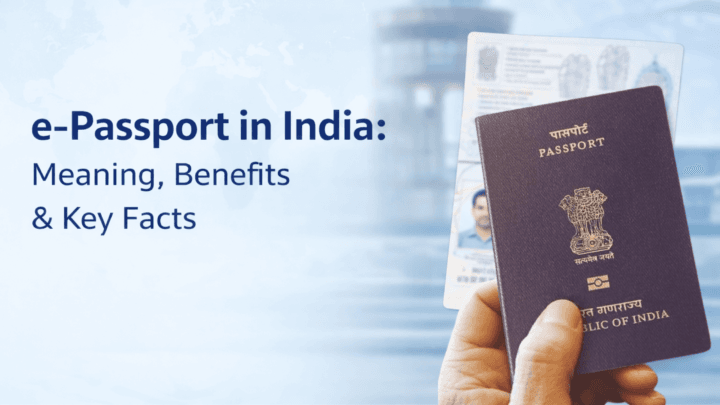
An e-passport is a passport that combines a regular paper booklet with modern electronic technology. While it looks similar to a standard passport, it contains an embedded RFID chip and antenna securely placed inside the booklet.
This electronic chip stores the passport holder’s essential personal details and biometric information in a protected digital format. To help identify it easily, an e-passport has a small gold-coloured symbol printed on the front cover.
The purpose of this chip is simple — to allow faster and more reliable identity verification at immigration checkpoints across the world.
How an e-Passport Works at Immigration
When an e-passport is scanned at an international border, the chip communicates with authorised immigration systems. The data stored inside the chip is compared with the printed information on the passport and the traveller’s identity.
Because the information is digitally signed, immigration officers can quickly confirm that:
- The passport is genuine
- The data has not been altered
- The passport belongs to the person carrying it
This process reduces manual checks and strengthens border security without adding inconvenience for travellers.
Benefits of an e-Passport for Passport Holders
The main benefit of an e-passport is enhanced protection of personal and biometric data.
Unlike traditional passports, where information exists only in printed form, an e-passport holds the same data securely inside its electronic chip. This digital information is cryptographically signed, meaning it cannot be changed or duplicated.
As a result:
- The risk of fake or forged passports is greatly reduced
- Identity fraud becomes much harder
- Immigration authorities can verify authenticity instantly
The technology supporting this security is known as Public Key Infrastructure (PKI). PKI ensures that the data stored on the chip remains confidential, accurate, and traceable to its original issuing authority.
For frequent travellers, this also means smoother immigration experiences and fewer delays at international borders.
Is It Mandatory to Replace an Existing Passport with an e-Passport?
No, replacing your current passport is not required.
All passports issued by the Government of India remain valid until their expiry date, regardless of whether they are electronic or not. There is no obligation for existing passport holders to upgrade to an e-passport immediately.
The issuance of e-passports is being done in a phased manner. Once a particular Passport Office becomes technically equipped, applicants applying under that office will automatically receive an e-passport.
Until then, regular passports will continue to be issued and accepted for international travel without any problem.
Availability of e-Passport in India
The rollout of e-passports is taking place gradually across different Passport Offices in India. Availability depends on:
- Technical readiness of the Passport Office
- Location of the Passport Seva Kendra
- Application timing
This is why applicants in cities like Delhi and Noida may see differences in availability depending on where they apply.
Understanding these details before booking an appointment helps avoid confusion and delays.
Why Proper Guidance Matters for e-Passport Applications
While the application process for an e-passport is largely similar to a regular passport, accuracy is more important than ever. Errors in application forms, incorrect document submission, or wrong appointment selection can delay processing.
Professional passport consultation helps applicants:
- Choose the correct application category
- Prepare documents accurately
- Avoid rejections or objections
- Navigate phased e-passport availability
This is especially helpful for working professionals, families, and first-time applicants in high-demand regions like Delhi NCR.
Conclusion
The e-passport represents a major step forward in making international travel more secure and efficient for Indian citizens. By combining physical documentation with advanced electronic security, it reduces fraud risks while improving trust at global borders.
While it is not mandatory to replace existing passports, e-passports will gradually become the standard in India. For applicants in Delhi and Noida, staying informed and applying correctly from the beginning can make the entire process smooth and stress-free.
With the right guidance, getting your passport — electronic or otherwise — doesn’t have to be complicated.